
The Lake Life Guide · November 9, 2026
What Is Snow Blindness? How Sunglasses Help Protect Your Eyes
What Is Snow Blindness?
Snow blindness is a form of photokeratitis, a painful injury caused by ultraviolet radiation affecting the cornea, the clear surface at the front of the eye.
Snow and ice can reflect UV rays toward your face, increasing exposure beyond the sunlight coming directly from the sky. Fresh snow can reflect nearly 80 percent of UV radiation, and exposure can become more intense at higher elevations. Source: American Optometric Association
Despite its name, snow blindness does not require a clear or warm day. UV radiation can still be present when the temperature is below freezing or clouds make the sky appear dim.
What Does Snow Blindness Feel Like?
Symptoms do not always appear immediately. You may finish an afternoon outside before realizing that your eyes have been overexposed.
Possible symptoms include:
- Eye pain or a gritty sensation
- Redness and tearing
- Sensitivity to light
- Blurred vision
- Swollen eyelids
- Difficulty keeping your eyes open
If you suspect snow blindness, move indoors, remove contact lenses, avoid rubbing your eyes, and contact an eye care professional. Seek prompt medical attention for severe pain, significant vision changes, or symptoms that do not improve.
Do Polarized Sunglasses Prevent Snow Blindness?
Polarized lenses can reduce the bright horizontal glare reflected from snow, ice, wet roads, and water. This may improve visual comfort and make details easier to see in bright winter conditions.
However, polarization and UV protection are not the same feature. Polarization manages visible glare, while UV filtering helps protect the eyes from ultraviolet radiation.
Look for eyewear labeled as blocking 99 to 100 percent of UVA and UVB radiation or providing UV400 protection. Polarization is a useful addition for glare, but it should not replace verified UV protection. Our guide to polarized versus nonpolarized sunglasses explains the difference.
Sunglasses or Goggles: Which Should You Wear?
The right choice depends on the activity and conditions.
Sunglasses can work well for driving, walking, casual hiking, and other everyday winter activities. Choose a secure frame with enough lens coverage to limit light entering around the sides.
Goggles generally provide better coverage during skiing, snowboarding, snowmobiling, or prolonged exposure to blowing snow and cold wind. Their enclosed shape can also reduce light entering from above, below, and beside the lenses.
The American Academy of Ophthalmology recommends winter eyewear that blocks at least 99 percent of UV radiation and protects the eyes from dry, freezing wind. Source: American Academy of Ophthalmology
What to Look for in Winter Sunglasses
Before spending a day around snow, check for these features:
- Verified UV protection: Look for 99 to 100 percent UVA and UVB protection or UV400 labeling.
- Good coverage: Larger lenses or a closer fitting frame can reduce exposure around the edges.
- Polarized lenses: These help manage distracting glare reflected from snow and wet surfaces.
- A secure fit: Frames should remain comfortable and stable as you move.
- An appropriate lens tint: Darker lenses may help in intense sunlight, while a lighter tint can provide better visibility under heavy clouds.
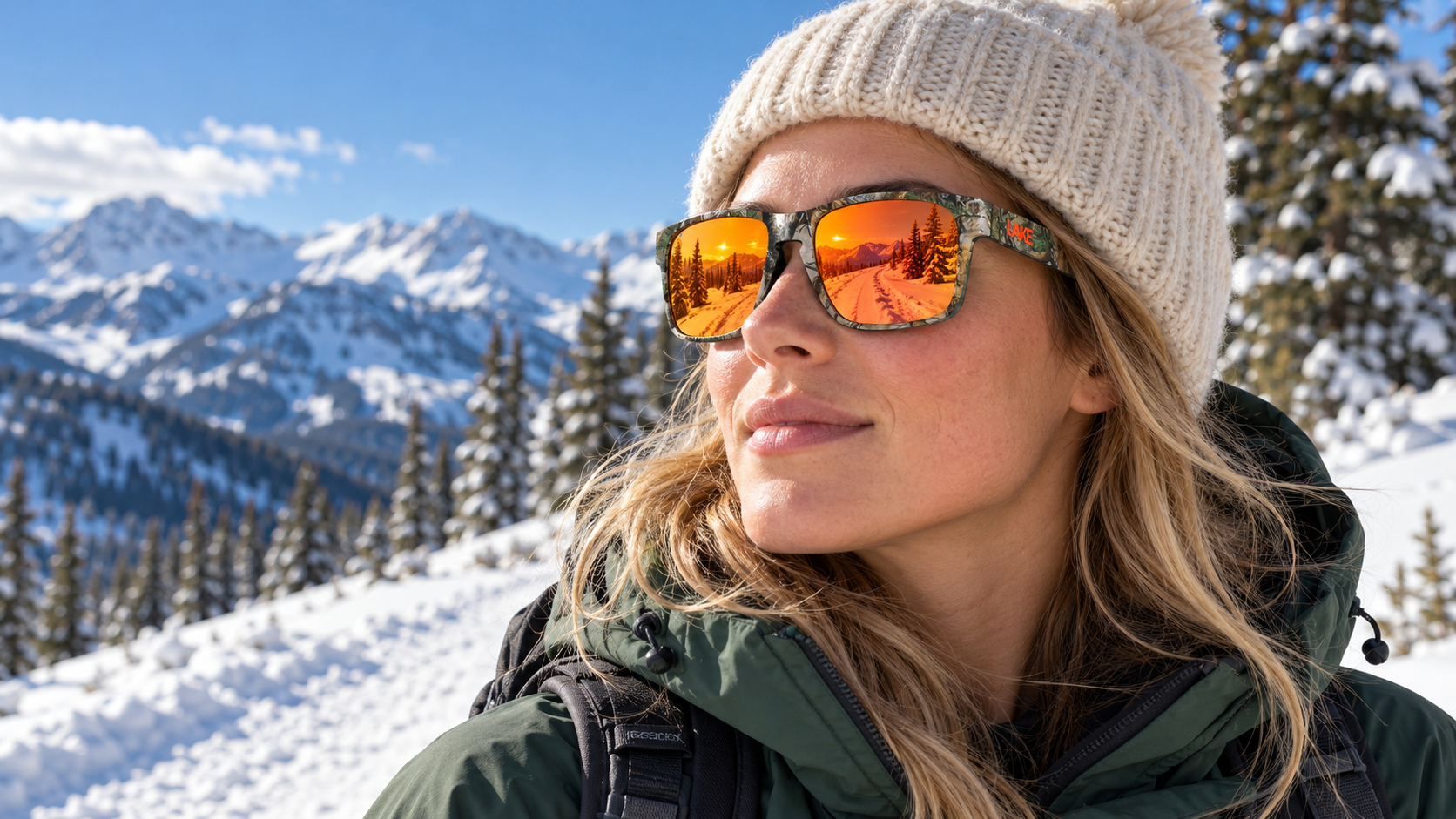
LAKE’s Lanier Deadwood Blaze Orange polarized sunglasses pair a woodland camouflage frame with vivid orange mirrored polarized lenses. You can compare additional styles and lens options in the complete LAKE polarized sunglasses collection.
Remember the Kids
Children need winter eye protection too. They may spend hours sledding, skiing, or playing in the snow without noticing how much reflected light is reaching their eyes.
Choose properly fitted sunglasses or goggles that provide verified UV protection and stay securely in place. A comfortable pair is more likely to remain on for the entire outing.
Protect your eyes before heading into the snow
Snow blindness is preventable. Cold temperatures and cloud cover do not eliminate UV exposure, and snow can reflect a substantial amount of ultraviolet radiation toward your eyes.
Wear sunglasses with verified UV protection during ordinary winter activities, add polarization when reflected glare is a concern, and choose goggles when you need more complete coverage. Protecting your eyes before they begin to hurt is much easier than ending a winter adventure early.