
The Lake Life Guide · October 10, 2026
What Do Mirrored Sunglasses Do?
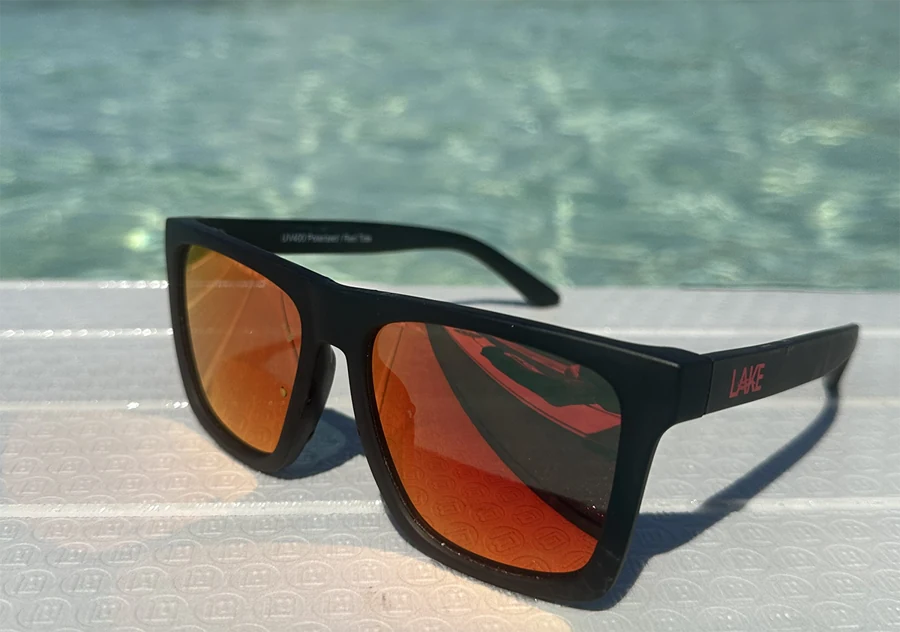
How Do Mirrored Sunglasses Work?
A mirrored lens has a thin reflective coating applied to its front surface. This coating reflects a portion of visible light before it passes through the lens.
Under the reflective layer is a traditional tinted lens. The base tint controls much of what the wearer sees, while the exterior coating creates the mirrored appearance and helps reduce overall brightness. warbyparker.com
This is why mirrored sunglasses are commonly used in bright environments such as:
-
Open water
-
Beaches
-
Snow covered areas
-
Bright highways
-
High elevation trails
-
Large concrete or paved spaces
The benefit is most noticeable when direct sunlight and reflected light make an ordinary tinted lens feel uncomfortably bright.
Are Mirrored and Polarized Sunglasses the Same?
No. Mirroring and polarization perform different jobs.
A mirror coating reflects some incoming visible light from the front surface of the lens. Polarization filters the horizontally oriented glare that reflects from surfaces such as water, wet roads, docks, and vehicle hoods.
A lens can be:
-
Mirrored but not polarized
-
Polarized without a mirror finish
-
Both mirrored and polarized
For boating, fishing, and lake use, having both features can be useful. The mirror coating helps manage intense brightness, while polarization addresses the reflected glare coming from the water.
Read our guide to polarized versus nonpolarized sunglasses for a closer explanation of how polarization works.
Does the Mirror Color Change What You See?
Not always.
The color visible on the outside of a mirrored lens may be different from the tint you see while wearing it. A blue mirror, for example, can be applied over a gray, brown, or another colored base lens.
The underlying tint has a major effect on contrast, color perception, and how bright the environment appears. The mirror color mainly affects the lens’s exterior appearance and the wavelengths reflected away from its surface.
When comparing sunglasses, look beyond the color shown in the product photograph. Consider both the mirror finish and the base tint.
Our guide to gray, amber, and blue sunglass lenses explains how different lens colors perform around lakes, rivers, and the ocean.
Do Mirrored Sunglasses Provide UV Protection?
A mirrored appearance does not automatically prove that a lens provides UV protection.
Mirror coatings manage visible light. UV protection involves filtering ultraviolet radiation, which is outside the visible spectrum. The two features can be combined, but one does not guarantee the other.
When shopping, look for clear information about UV protection rather than judging a lens by its darkness, color, or reflectivity. A reputable manufacturer should explain what protection its lenses provide. warbyparker.com
Are Mirrored Sunglasses Better for Fishing and Boating?
Mirrored lenses can be a good choice for fishing and boating in strong sunlight, particularly on large bodies of open water.
A mirrored finish can reduce the intensity of visible light coming from the sky, while polarization reduces glare reflected from the water. Together, these features can make long periods in bright conditions more comfortable.
They may be less useful during heavily overcast mornings, shaded river trips, or the final hour before sunset. A dark base tint combined with a strong mirror finish can make low light conditions feel unnecessarily dim.
The best lens is not always the darkest one. It is the lens that matches the environment and time of day.
Can You Drive With Mirrored Sunglasses?
Mirrored sunglasses can work for daytime driving when the tint is appropriate for the conditions.
Before driving, confirm that you can clearly see:
-
Traffic signals
-
Brake lights
-
Road markings
-
Pedestrians
-
Dashboard information
-
Navigation displays
Do not use dark mirrored sunglasses at night or when weather conditions make visibility poor. If the lenses are also polarized, test them with your vehicle’s digital displays while parked because polarization can make some screens appear darker from certain angles.
How Should You Clean Mirrored Lenses?
Because the mirror treatment is located on the exterior surface, careful cleaning helps preserve its appearance.
Rinse away dust, sand, and dried salt before touching the lenses. Then use a clean microfiber cloth and a cleaner labeled safe for coated eyewear.
Avoid:
-
Paper towels
-
Shirts or rough fabric
-
Household glass cleaners
-
Abrasive polish
-
Scrubbing a dry, dusty lens
When you are finished wearing the sunglasses, store them in a protective case rather than placing them face down.
Choosing the Right Mirrored Sunglasses
Before selecting a mirrored lens, consider four separate features:
-
UV protection: Look for clearly stated protection.
-
Polarization: Choose it when reducing glare from water or roads is important.
-
Base tint: Match the tint to your typical light conditions.
-
Frame fit: Choose a secure, comfortable frame you will wear consistently.
LAKE’s VistaClear lens technology combines polarization with anti reflection, anti saltwater, and anti scratch properties for outdoor use. You can compare available colors and frame profiles in the LAKE polarized sunglasses collection.
The Bottom Line
Mirrored sunglasses reflect a portion of visible light and create a bold exterior finish. They are especially useful in bright, reflective environments, but the mirror coating should not be confused with polarization or UV protection.
For lake days, boating, fishing, and other bright outdoor activities, look at the complete lens system: mirror finish, polarization, UV protection, base tint, and fit.